

Ideas · Experience · Practice
Leadership Books & Intellectual Property
Books are an important part of my work in developing people and leaders. They translate ideas, experience, and practical frameworks into knowledge that can be learned, reflected on, and applied.

THE SERIES · CONCEPT OVERVIEW
The First-Time Leader Growth Path
Five Books. One Journey. From Yourself to the Impact on the Business.
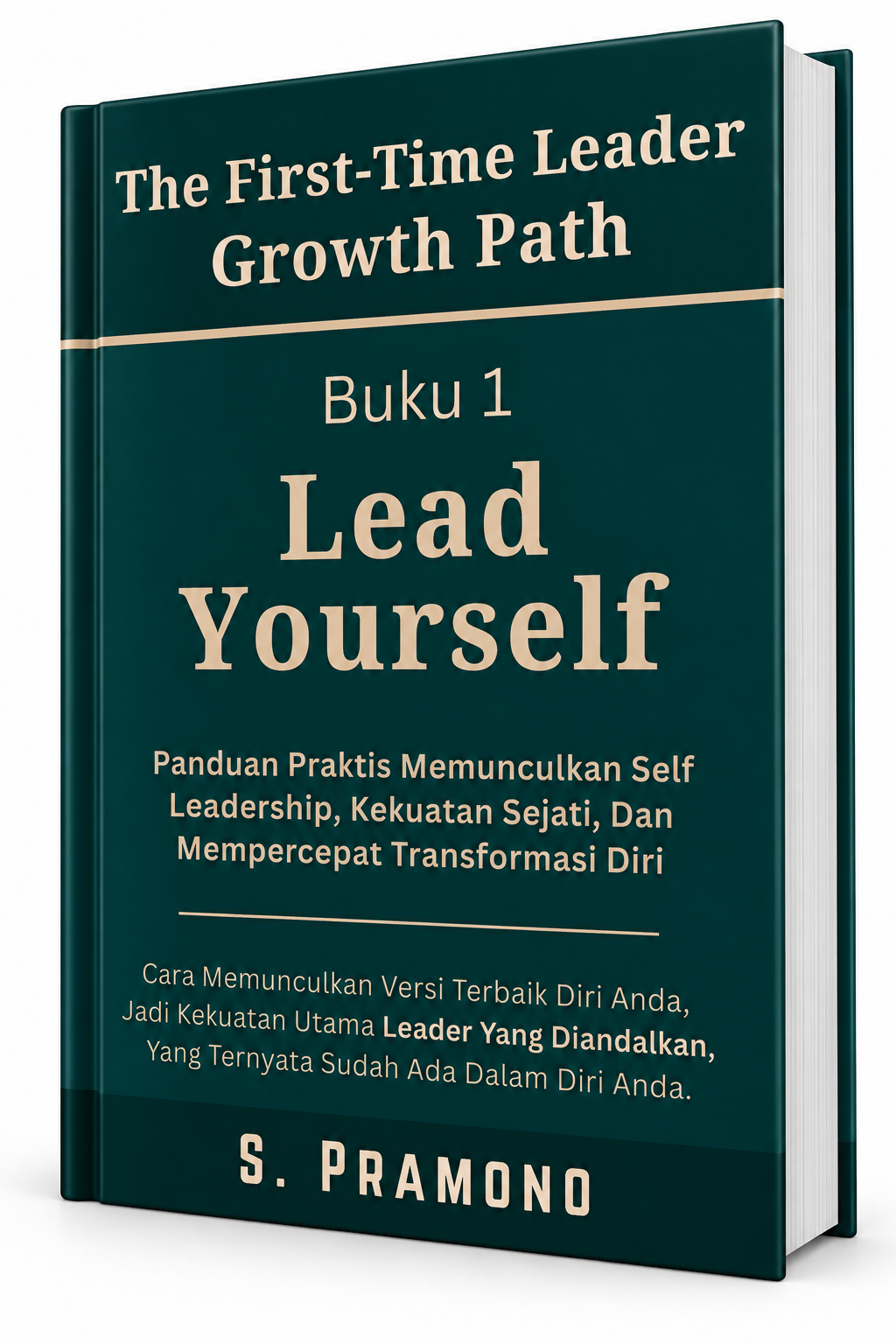 Book 1
Lead Yourself
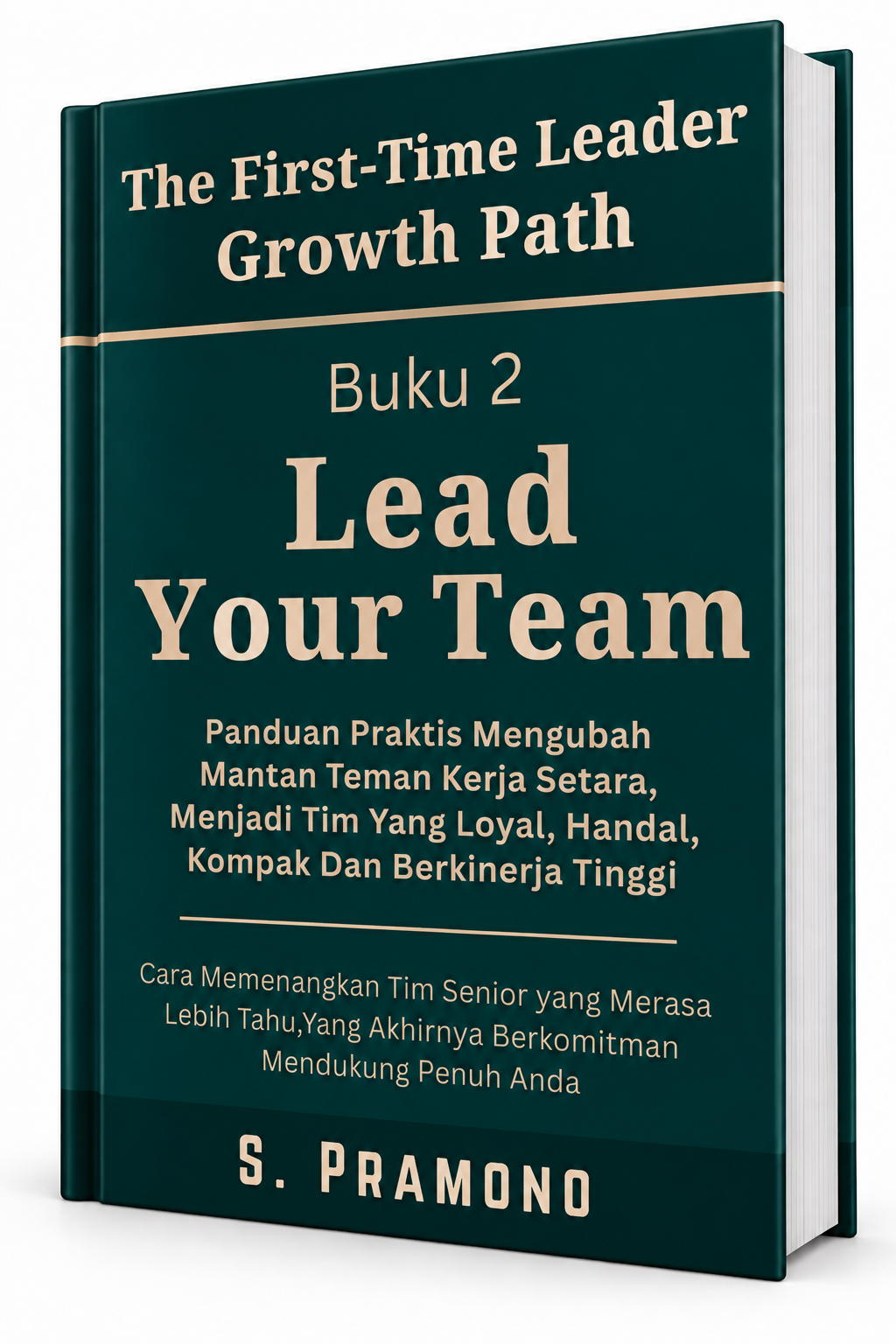 Book 2
Lead Your Team
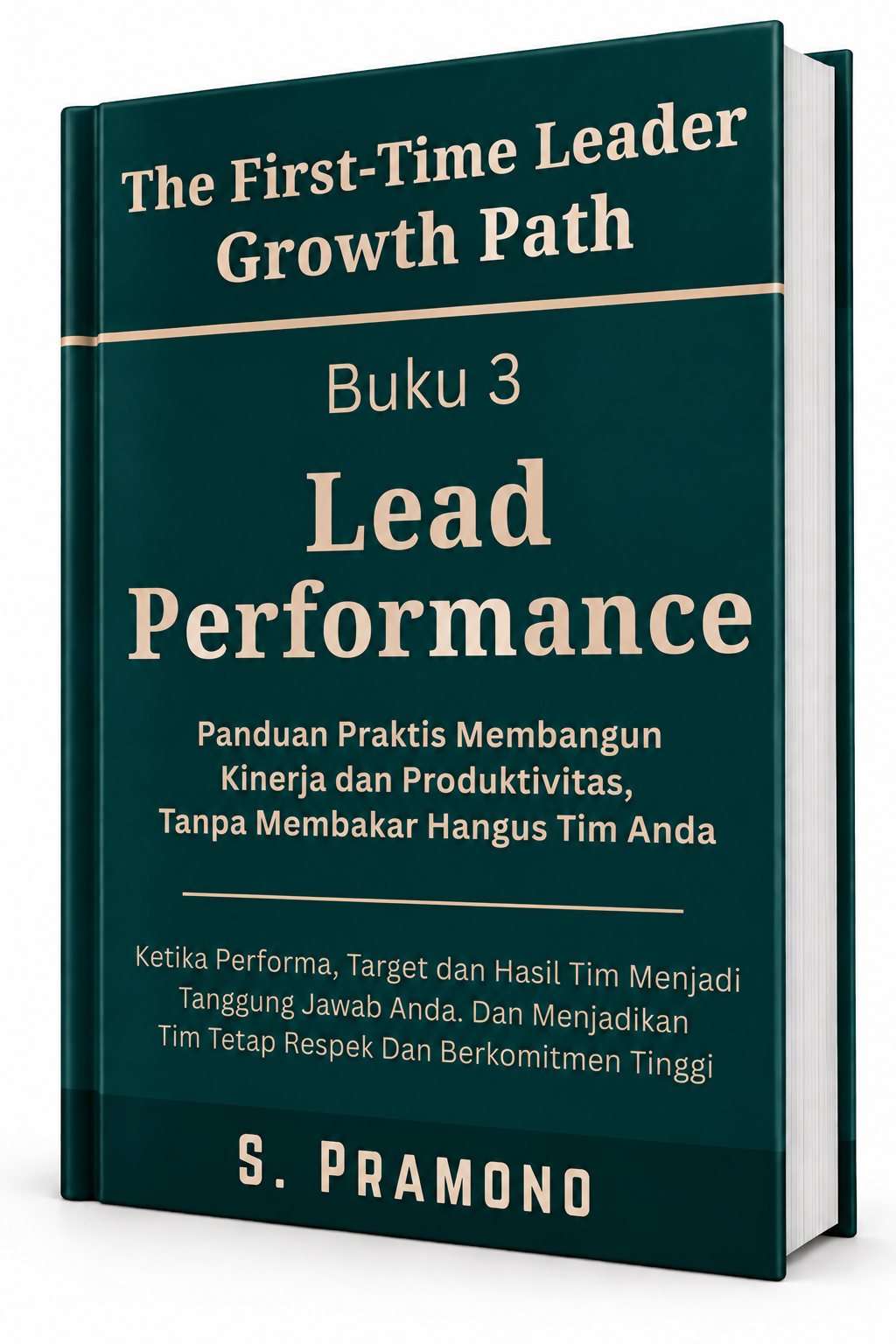 Book 3
Lead Performance
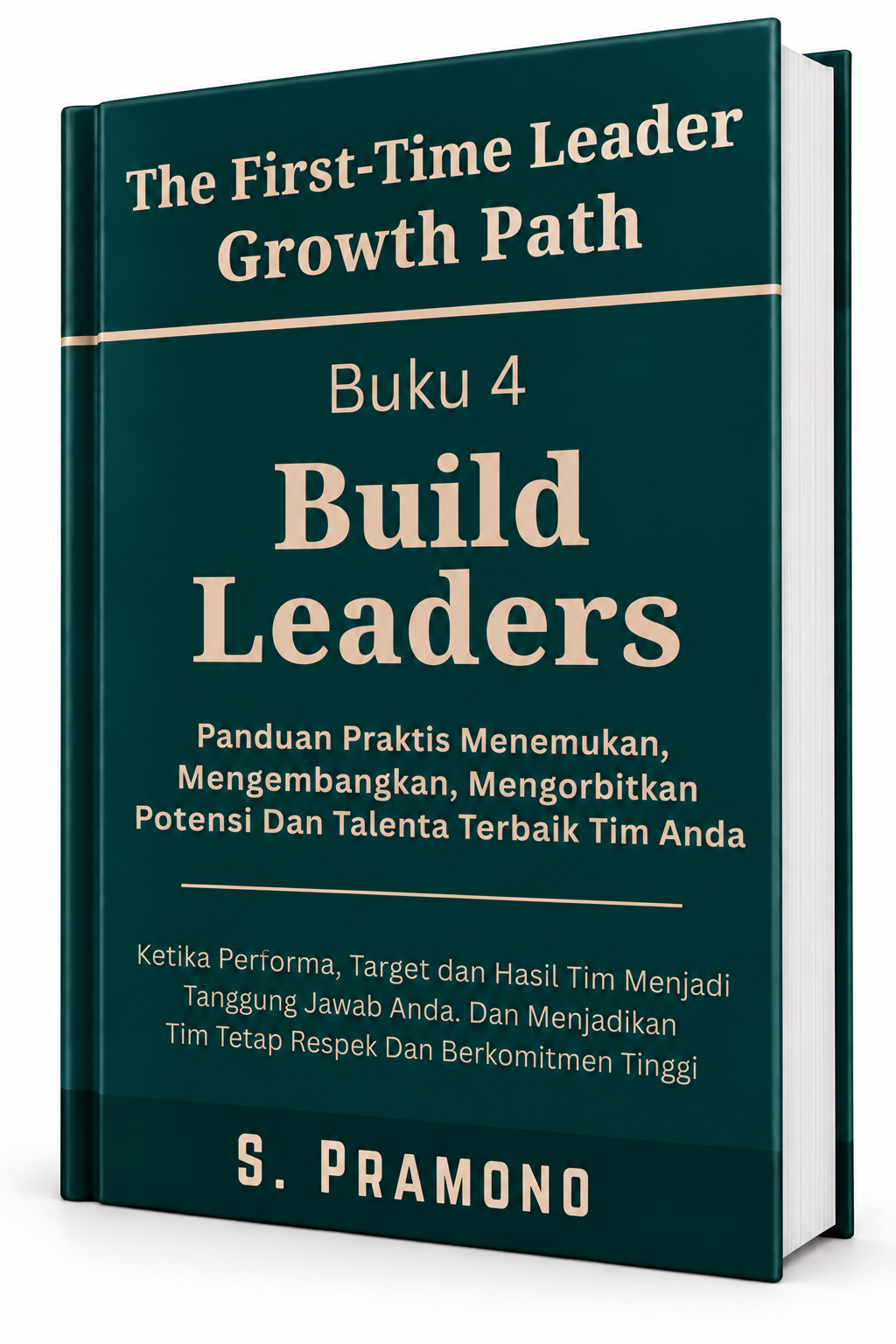 Book 4
Build Leaders
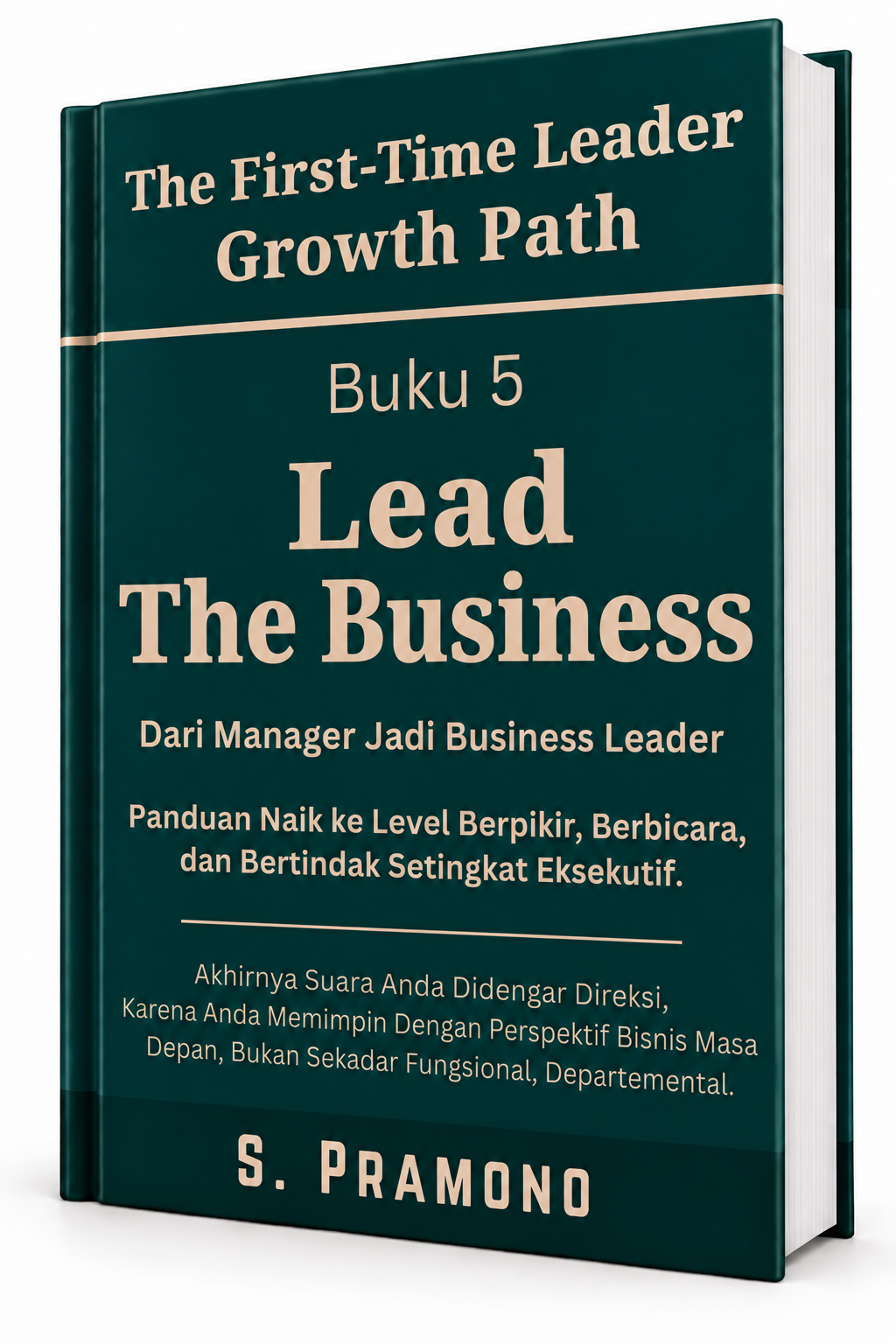 Book 5
Lead The Business
You were promoted because you were exceptionally good at doing something. Then, on your first day in the role, your job became something you had never been taught: leading people.
No training came with the appointment letter. All that came was expectation, and a team quietly beginning to watch how you behave.
The First-Time Leader Growth Path was written for that moment, and for the years that follow.
Leadership Is Not One Leap, but One Path
Most leadership books treat leading as one large topic that can be explained once. Experience in the coaching room shows otherwise. A new leader faces entirely different challenges in the third month, the first year, and the third year. That is why this series is designed as a growth path, not a collection of advice. It moves from the nearest circle, yourself, toward ever wider circles: team, performance, new leaders, and finally business and society. The order is deliberate. Leading a team is hard to do well if you are not yet steady as a person. Managing performance is hard without trust. Developing new leaders is hard if your own team’s results are not yet under control.
Five Books, Five Questions
Book 1: Lead Yourself. Who am I now, after this role has changed everything? The journey begins at the point most often skipped: yourself. Identity shift, Hero Syndrome, impostor syndrome, emotions, exhaustion, time, and the first ninety days.
Book 2: Lead Your Team. How do I make my team truly trust me? Leading former peers, building trust, delegating, one-on-ones, feedback, difficult conversations, conflict, and psychological safety.
Book 3: Lead Performance. How do I stay trusted while demanding results? Being liked is not enough. Clear expectations, coaching for performance, top and low performers, accountability, motivation, performance reviews, and hard decisions.
Book 4: Build Leaders. Who am I preparing to replace me? From managing tasks to building people: recognizing talent, development plans, releasing authority, preparing successors, and letting your best people go further.
Book 5: Lead The Business. How do I think and speak in a bigger boardroom? Business acumen, financial literacy, strategic thinking, cross-functional stakeholders, managing up, leading change and crisis, executive presence, and leadership legacy.
Read in order, these five questions form one arc: from "who am I" to "who am I helping grow," and then "what will I leave behind."
One Pattern, Fifty Chapters
The series comprises 50 chapters, and each follows the same pattern so you always know what you will find. Every chapter opens with a question you may have asked yourself in the middle of the night, then presents a real scenario, the Author’s Confession (a personal failure told plainly, not theory from an ivory tower), a memorable named framework, action steps with a key-behavior table, and a Story from the Coaching Room featuring Vinno and Avi, two leaders whose situations will feel familiar. Most chapters include a self-diagnostic checklist, quick tips, and a reflective exercise.
The frameworks are made to be used: the Delegation Ladder, SBI, GROW, the Circle of Control, the Stakeholder Map, and more. The aim is not to make you know more. It is to make you do something different, starting tomorrow morning.
Positive Vibe: Intention Before Technique
At the start of every book is a short section called Positive Vibe. It is not a chapter, and it is not poster-style positive thinking.
The idea is simple: the same leadership technique can feel very different depending on where it is practiced from. Delegating because you want your burden lightened feels different to the receiver than delegating because you trust their potential. Giving feedback for the sake of a target differs from giving feedback because you care about someone’s growth.
Positive Vibe carries one awareness through the series: becoming a person of benefit, wherever your role. In Book 1, this awareness begins with yourself. In Book 2, it spreads through presence. In Book 3, high standards are understood as a form of care. In Book 4, the benefit multiplies through new leaders. In Book 5, it widens to the scale of business and society.
What You Will Take Home
After completing this series, you will not become a flawless leader. That is an empty promise, and you are right to be suspicious of any book that offers it. What is realistic is small changes that accumulate:
- You stop judging yourself by how much you do alone, and start judging by how far your team can go without you.
- You have words for the conversations you have been avoiding.
- You see the people around you as the next leaders.
- You can sit in a bigger boardroom and join the conversation in the language of business.
Who This Series Is For
This series suits new leaders with zero to two years of experience, longer-serving leaders who feel they have never truly "landed" in their role, and managers, mentors, and HR or L&D teams who want honest reading to accompany new leaders.
It may suit you less if you seek quick tricks without being willing to look in the mirror, or expect academic management theory. The content is practical, conversational, and born in the coaching room, not the lecture hall. Each book can stand alone, as Books 2 to 5 open with a summary of the earlier ones.
Lead Yourself
Before You Lead Others, First Find the Leader Within You
Book 1 of 5 · The First-Time Leader Growth Path Series
Yesterday, you were measured by how well you worked. Today, you are measured by how well others work.
No one explained how to get from the first to the second. No training came with your appointment letter. All you were handed was expectation, a team that has begun to watch, and a small voice in your head asking, "Do I truly belong here?"
If that question has ever found you, this book was written for you.
The Problem Rarely Spoken Aloud
Many assume a new leader’s greatest challenge is the team. In reality, the challenge almost always begins closer to home: within yourself.
A first promotion often feels like a loss rather than a victory. The skills that earned you respect are no longer the main measure, while the new skills now demanded of you have not yet been learned. So you take over the team’s work because it is faster to do it yourself. You go home late, exhausted, unsure what you actually accomplished that day.
That is not a sign you are less capable. It is a sign that a major transition happened without preparation.
The Question This Book Answers
Who am I now, after this role has changed everything?
The answer shapes a great deal. If your identity is still tied to being "the one who does it best," you will keep being tempted to take over. If you have not faced your doubts, your energy will go into proving yourself rather than leading.
A Journey in Ten Chapters
This book takes you from confusion toward clarity:
- Identity shift: from "my work is good" to "my team succeeds."
- Hero Syndrome: when helping turns into taking over.
- Impostor syndrome: telling healthy doubt from paralyzing doubt.
- Emotional intelligence: recognizing emotion before it takes the wheel.
- Stress and burnout: the signs that are often ignored, and a realistic recovery.
- Time: organizing your day like a leader, not like an executor.
- Reflection and self-awareness: turning experience into learning.
- Work-life balance: honest boundaries, not perfect equilibrium.
- Confident decision-making: moving forward with 70% of the information.
- The first ninety days: a concrete plan for building credibility.
Every chapter offers a memorable named framework, such as the Identity Shift Map, the Three Time Boxes, the 70% Information Decision, and the Three Phases of the First 90 Days.
Designed to Be Practiced, Not Merely Read
Each chapter opens with a real situation, followed by the Author’s Confession: a personal failure told plainly, not theory from an ivory tower. Then come the framework, the action steps, and a Story from the Coaching Room featuring Vinno or Avi, two leaders whose situations will feel familiar. Most chapters include a self-diagnostic checklist, and every chapter closes with a reflective exercise you can complete that very day.
The aim is not to make you know more. The aim is to make you do something different, starting tomorrow morning.
Positive Vibe
Before Chapter 1, you will find a short section called Positive Vibe. It is not a chapter, and it is not poster-style positive thinking. It is an invitation to begin with intention. In this book, the awareness of becoming a person of benefit starts with yourself, because someone who has not made peace with themselves will struggle to be a source of calm for others.
This Book Is for You If
- You were recently promoted and feel awkward in the new role.
- You often think, "It’s faster if I just do it myself."
- You are tired, but unsure whether the exhaustion is normal.
- You quietly wonder whether you deserve to be in this position.
What You Will Take Home
A clear understanding of what has changed in your role. Ways to manage yourself under pressure. Reflective habits you can sustain. And a realistic plan for your first ninety days.
Not a perfect version of yourself, but a more honest and better prepared one.
Lead Your Team
Building the Trust That a Title Cannot Give
Book 2 of 5 · The First-Time Leader Growth Path Series
A title makes people obey you. Trust makes them willing to follow you.
The two are different, and your team knows exactly how.
Perhaps your meetings are polite, yet no one speaks honestly. Perhaps tasks are finished on time, but without enthusiasm. And you cannot tell what the people in the room are really thinking.
This book was written for that moment.
The Problem That Is Hard to See
A team that does not trust its leader rarely says so openly. They still show up, still work, still smile. What changes is what cannot be seen: ideas that are no longer offered, problems hidden until it is too late, and the extra energy no longer given.
The cost is felt only when your best people begin looking elsewhere.
Many new leaders do not fail for lack of ability. They fail to build relationships because no one taught them how. They lead former peers, fear losing friendships, hesitate to let go of work, and postpone difficult conversations for far too long.
The Question This Book Answers
How do I make my team truly trust me?
The answer is not found in communication tricks. Trust is built from small, consistent things: how you listen, how you keep your word, and how you react when someone makes a mistake.
A Journey in Ten Chapters
- Leading former peers: the Honest Opening Conversation, without pretending nothing has changed.
- Knowing your team as people: Four Dimensions for understanding each member, without becoming an interrogator.
- Building trust: the Three Components of Trust, and what you can improve starting this week.
- Delegating: the Delegation Ladder, to decide how much control to release.
- Giving instructions: Five Elements of Instruction, so your message truly lands.
- One-on-ones: Three Spaces of conversation that turn a routine meeting into a leadership tool.
- Giving feedback: the SBI model, to say difficult things without attacking the person.
- Difficult conversations: the SOFT approach, to enter calmly, firmly, and respectfully.
- Team conflict: Four Steps of Conflict Resolution, without taking sides and without avoiding.
- Psychological safety: Three Signals to read whether the space for honesty is truly safe.
Designed to Be Practiced
Each chapter opens with a real situation, followed by the Author’s Confession: a leadership mistake told plainly, not theory from an ivory tower. Then come a named framework, action steps with a key-behavior table (what is usually done, what replaces it), and a Story from the Coaching Room featuring Vinno or Avi. Some chapters include a self-diagnostic checklist, and all close with an exercise you can try at your next one-on-one.
This book does not teach you how to "control" a team. It teaches you how to make a team want to be involved.
Positive Vibe
Before Chapter 1, a short section called Positive Vibe offers one idea: the atmosphere you bring into a room is contagious. A team reads its leader’s energy faster than it reads their words. So the intention to become a person of benefit to those around you shows up in something as small as how you arrive at the morning meeting. This is not poster-style positive thinking; it is an invitation to begin with the right intention.
This Book Is for You If
- You have just begun leading people who were once your equals.
- Your team tends to stay quiet in meetings, and you do not know what they truly think.
- There is a difficult conversation you have postponed for far too long.
- You want to delegate, but the results never match what you hoped.
What You Will Take Home
A way to build trust deliberately. The language for the conversations you most avoid. A one-on-one habit that makes your team feel heard. And the courage to create a space safe for honesty.
The book opens with a short summary of Book 1, so you will not feel lost if you start here.
Lead Performance
Being Liked Is Not Enough
Book 3 of 5 · The First-Time Leader Growth Path Series
Your team likes you. The atmosphere is comfortable. No one argues.
Yet the results are not moving.
Many new leaders get stuck at this point. They work hard to build warm relationships, then fear spoiling them with demands. This book was written to show that the fear is mistaken.
The Price of Too Much Comfort
A common belief among new leaders: making demands will damage relationships. So they postpone, soften the message, or finish the incomplete parts themselves. In the short term, the atmosphere feels safe.
In the long term, the price is high. High-performing team members feel unappreciated because others receive the same treatment. Those who fall behind are never given a chance to improve. Standards blur, and gradually everyone works below their best.
Picture a team leader who notices a member repeatedly missing deadlines. They gently remind them again and again, always ending with "it’s fine, catch up later." Three months later, at evaluation time, they must give a low rating. The member is stunned and feels betrayed: "Why are you only telling me now?"
The problem is not a lack of courage to assess. The problem is the delay in speaking.
The Question This Book Answers
How do I stay trusted while demanding results?
You do not want to be a harsh boss, but you do not want to be one who lets things slide either. This book helps you find the position between the two, not through half-hearted compromise, but through clarity.
A Journey in Ten Chapters
- The comfortable but unproductive team: Two Axes of Leadership, care and standards, to see where you stand now.
- Clear expectations: Four Pillars of Expectation, so no one has to guess.
- Targets and KPIs: SMART Plus Involvement, so the team owns the target rather than merely receiving it.
- Coaching for performance: the GROW Model, to help people find their own solutions.
- Keeping top performers: Three Needs of Top Performers, what makes them stay and what makes them quietly leave.
- Handling low performers: a fair, clear, documented Three-Stage Performance Improvement Process.
- Accountability: the Circle of Control, to ask for responsibility without judgment.
- Motivation: Four Types of Motivators, so you stop using one approach for everyone.
- Performance reviews: Year-Round Review, so there are no surprises at the end.
- Hard decisions: Three Phases of Hard Decisions, to decide without losing your humanity.
Designed to Be Practiced
Each chapter opens with a real situation, followed by the Author’s Confession: personal failures, from times of being too soft or too harsh, told plainly. Then come a framework, action steps, and a Story from the Coaching Room featuring Vinno or Avi. A self-diagnostic checklist helps you examine your own habits before judging others, because many performance problems turn out to begin on the leader’s side.
This book does not offer a harsh leadership style, nor does it defend a leadership that always yields. Its approach is simple: high standards are a form of care.
Positive Vibe
Before Chapter 1, a short section called Positive Vibe affirms this. Giving someone clarity and standards is often the deepest form of respect, because it shows you believe they are capable. Becoming a person of benefit sometimes means daring to say what is uncomfortable, in a way that still honors the person. This is not poster-style positive thinking; it is intention tested through courage.
This Book Is for You If
- You struggle to say "this is not yet good enough" without feeling guilty.
- A team member’s performance is declining, and you do not know where to begin.
- You worry that your top performer will leave.
- Performance reviews feel like an exhausting formality, for you and for your team.
What You Will Take Home
How to state expectations clearly. How to handle declining performance earlier and more fairly. How to motivate people according to their needs. And how to make hard decisions calmly and with dignity.
Build Leaders
The Leader Who Raises Leaders
Book 4 of 5 · The First-Time Leader Growth Path Series
The true measure of a leader is not how important they are to their team.
It is how ready the team is when they are gone.
That question is uncomfortable, and that is exactly why it needs to be asked. This book invites you to answer it honestly, and then to do something about it.
The Risk Behind Leadership That Looks Strong
Many successful leaders unknowingly build organizations that depend on them. Every decision waits for their approval. Every complex problem is brought to them. From the outside, it looks like strong leadership. From the inside, it is a risk waiting for its time: when they move on, take leave, or grow tired, everything stalls with them.
Picture a manager who is the go-to person for the entire team. They are proud to be seen as dependable. One day they are asked to join a cross-division program for three months, and the team is suddenly lost. Small decisions get stuck, minor problems grow, and not one person is used to stepping in.
The team did not fail. The system was built so that everything depends on one person.
Every organization needs new leaders continuously, yet very few prepare them deliberately. First-line leaders are in the most strategic position to break that cycle. You are closest to the next leader, and you see their potential before anyone else does.
The Question This Book Answers
Who am I preparing to replace me?
This question often feels threatening, because preparing a successor means accepting that one day you will no longer be in this seat. But that is exactly where the maturity of leadership is tested.
A Journey in Ten Chapters
- From managing tasks to building people: Two Levels of Leadership.
- Recognizing overlooked talent: Four Indicators of Potential.
- Coaching and mentoring: the Coaching vs Mentoring Matrix, when to ask and when to share experience.
- Individual development plans: Five IDP Components that do not end up in a drawer.
- Stretch assignments: the Optimal Development Zone, challenging without drowning.
- Delegating authority: Four Stages of Releasing Authority, gradual and measured.
- Preparing successors: the Talent Pipeline Principle, rather than a single name prepared in a hurry.
- A learning culture: Three Pillars, where mistakes are discussed to learn, not to find who is to blame.
- The leader’s shadow: Four Shadow Areas, the influence of your habits you may not notice.
- Letting go: Managing Emotional Transitions, releasing your best people with pride.
Designed to Be Practiced
Each chapter opens with a real situation, followed by the Author’s Confession: a personal failure told plainly. Then come a named framework, action steps, and a Story from the Coaching Room featuring Vinno or Avi, this time as leaders learning to build other leaders. Most leadership books stop at how to lead a team. This book addresses the harder, more emotional part: letting go, entrusting, and being glad if the people you develop one day surpass you.
Positive Vibe
Before Chapter 1, a short section called Positive Vibe offers one idea: a leader’s benefit multiplies when they succeed in raising a new leader. One person who grows because of you will reach dozens of others you may never meet. This is what becoming a person of benefit means on a wider scale. It is not poster-style positive thinking; it is intention carried out through daily decisions.
This Book Is for You If
- Your team depends on you for almost every decision.
- You find it hard to release authority because you worry the results will not match your own.
- You want to grow into a higher role, but no one is ready to replace you.
- You want to be remembered for the people who grew alongside you.
What You Will Take Home
How to read people’s potential. How to design real development. How to release control gradually without sacrificing quality. And how to prepare the baton of leadership with an open heart.
Lead The Business
The Bigger Boardroom
Book 5 of 5 (Series Finale) · The First-Time Leader Growth Path
Leading a solid team is not necessarily enough to be trusted in a bigger boardroom.
There, the language changes: numbers, strategy, risk, and the interests of many parties weighed at once. And no one will pause to explain it to you.
This closing book helps you step from "a leader who is good for their team" to "a leader trusted to help steer the business."
When the Old Lens Is No Longer Enough
The higher a person’s position, the fewer decisions are purely technical, and the more involve cross-functional considerations, risk, and limited resources. Many leaders who are excellent at the team level become awkward when speaking before directors, negotiating with other functions, or explaining decisions in business language. Not because they are less intelligent, but because no one ever explained that the lens used at this level is different.
Picture a leader invited to present before the board. They master the operational material, but when asked about the financial impact and how it links to next year’s strategy, they lose direction. The idea is good. They simply spoke the language of their team, while the room was waiting for the language of business.
Experiences like this make many leaders feel unworthy, when all that is missing is a way of thinking and some practice. Both can be learned.
The Question This Book Answers
How do I think and speak in a bigger boardroom?
This question covers two things at once: how you think, and how you convey it. A sharp mind that cannot be communicated is as ineffective as a convincing delivery that is empty.
A Journey in Ten Chapters
- From leading people to leading the business: Widening the Lens, seeing your team as part of a larger system.
- Business acumen: Three Layers, to understand how an organization creates value.
- Financial literacy: Four Financial Concepts, to read reports and ask the right questions.
- Strategic thinking: Three Strategic Questions, to lift your head above daily operations.
- Cross-functional stakeholders: the Stakeholder Map, building cooperation without direct authority.
- Managing up: the "No Surprises" Principle, working with your boss without flattery.
- Leading change: Three Elements of Change Communication, bringing your team with you.
- Leading through crisis: Three Principles of Crisis Leadership, staying grounded when others waver.
- Executive presence: Three Components, making it learnable rather than a mere talent.
- Leadership legacy: Three Legacy Questions, what you want to leave behind.
Designed to Be Practiced
This book keeps the pattern of the whole series: a real situation, the Author’s Confession, a named framework, action steps, a Story from the Coaching Room with Vinno or Avi, a self-diagnostic checklist, and a reflective exercise. But the material rises one level, from team matters to organizational matters.
The goal is not to turn you into a strategy consultant or financial analyst. It is more practical: to make you fluent enough to join the conversation, ask sharp questions, and be trusted when big decisions are made.
Positive Vibe
Before Chapter 1, a short section called Positive Vibe widens the awareness of becoming a person of benefit to the scale of business and society. A leader’s decisions at this level touch more people than appear: employees, customers, partners, and their families. That awareness is not a burden, but a compass. It is not poster-style positive thinking; it is intention that guides big decisions.
This Book Is for You If
- You are starting to be invited to meetings about numbers and strategy, and feel not yet fluent.
- You often clash with other functions because of differing priorities.
- You want to work more effectively with your boss.
- You want to know what kind of legacy you are building.
What You Will Take Home
The ability to read the business from a wider perspective. Confident communication at the senior level. Calm leadership through change and crisis. And a long-term leadership growth direction aligned with your values.
Continue your journey through The First-Time Leader Growth Path
Discover the complete journey and the learning experiences built around these five leadership dimensions.
In development
Becoming Impactful Leader
This book series is in development. More information about its focus and titles will be shared when the materials are ready.